Day 1–4
Sweep the core.
A birch profile board — the planche à trousser — shapes the clay-and-sand core. It dries beside the furnace flue before being buried in rammed Saône river sand.
Le Bourdon de Table.
A small bronze bell, cast in river sand. Tuned by hand. Made to be heard.
Three sizes. Three voices.
Strike the bell, then choose the bronze you want to live with.
The pouring month, lot number and exact frequency are cold-stamped after tuning.
A clear, bright note for the working day. 84 mm tall, 410 g. Eight seconds of sustain.
A warm midrange voice for gathering people. 112 mm tall, 780 g. Fourteen seconds of sustain.
A deep resonant hum. 148 mm tall, 1,350 g. Twenty-two seconds of sustain. Includes a hand-forged iron wall bracket and braided rawhide pull cord.
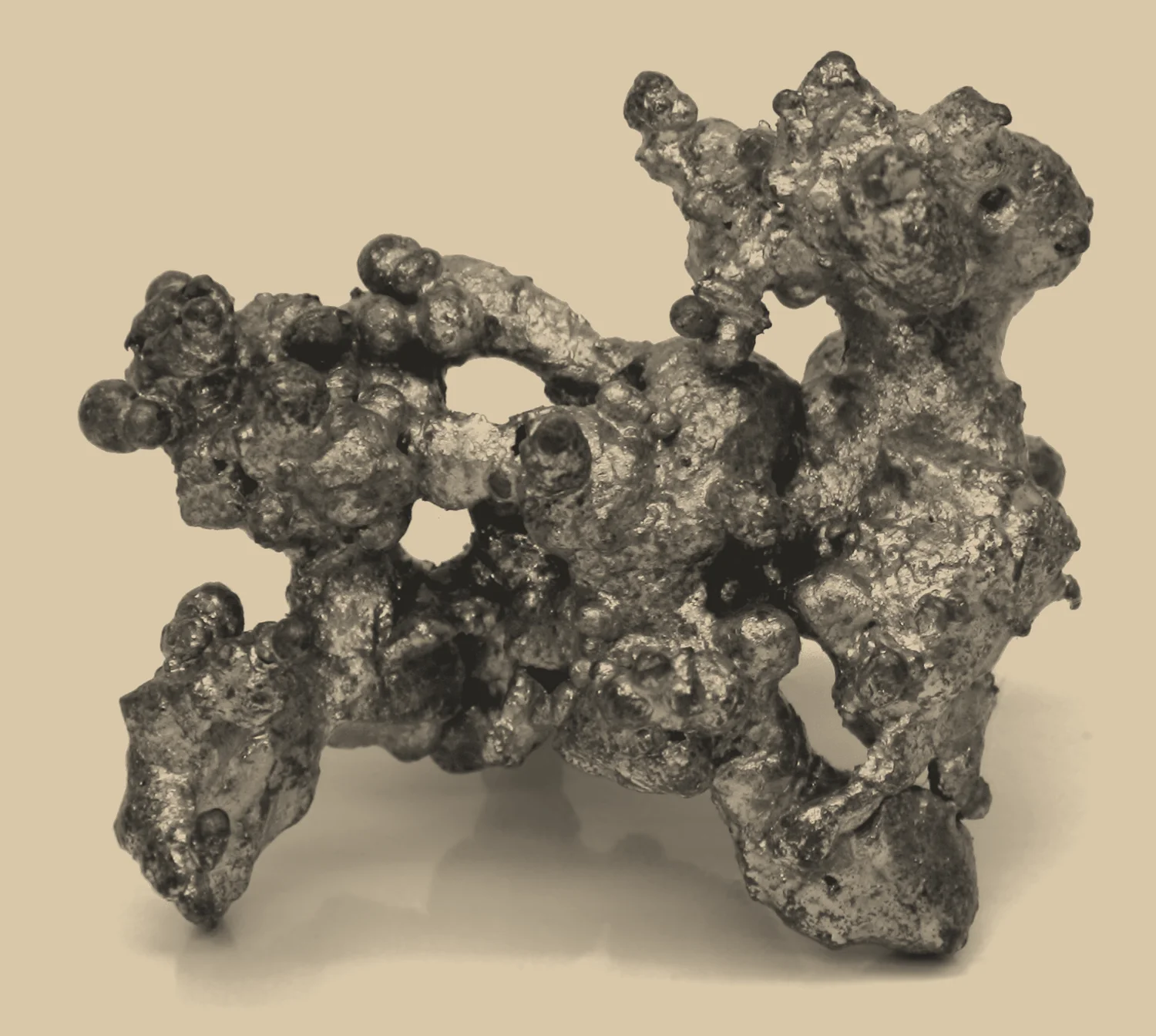
True bell bronze. No lead, no zinc, no fillers. This precise alloy gives the bell its weight, its warm colour and its long, singing decay.
CuSn22 / 1,140 °C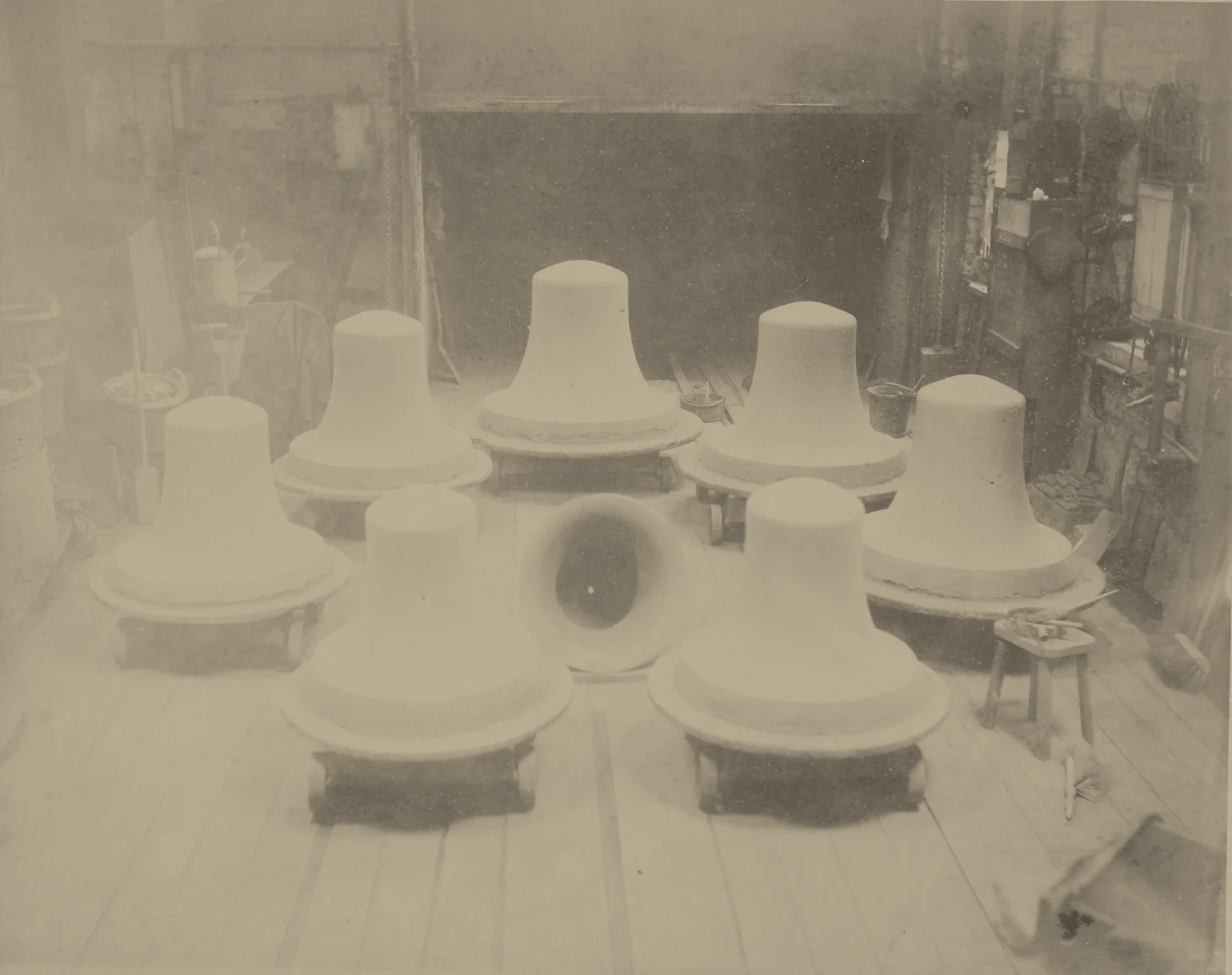
A birch profile board — the planche à trousser — shapes the clay-and-sand core. It dries beside the furnace flue before being buried in rammed Saône river sand.
Molten 78/22 bell bronze is ladled into the sand flasks. One firing each month. Eighteen bells in every pour.
After two days of slow cooling, the blackened sand mould is cracked open. A rough bronze bell emerges, carrying the texture of the river sand.
On a horizontal lathe, microns are shaved from the inner lip. The fundamental and minor-third hum tone are brought into agreement with a tuning fork.
The surface is finished, the forged iron clapper hung on rawhide, and the crown cold-stamped. Its month, lot number, exact frequency and maker’s mark stay with it.
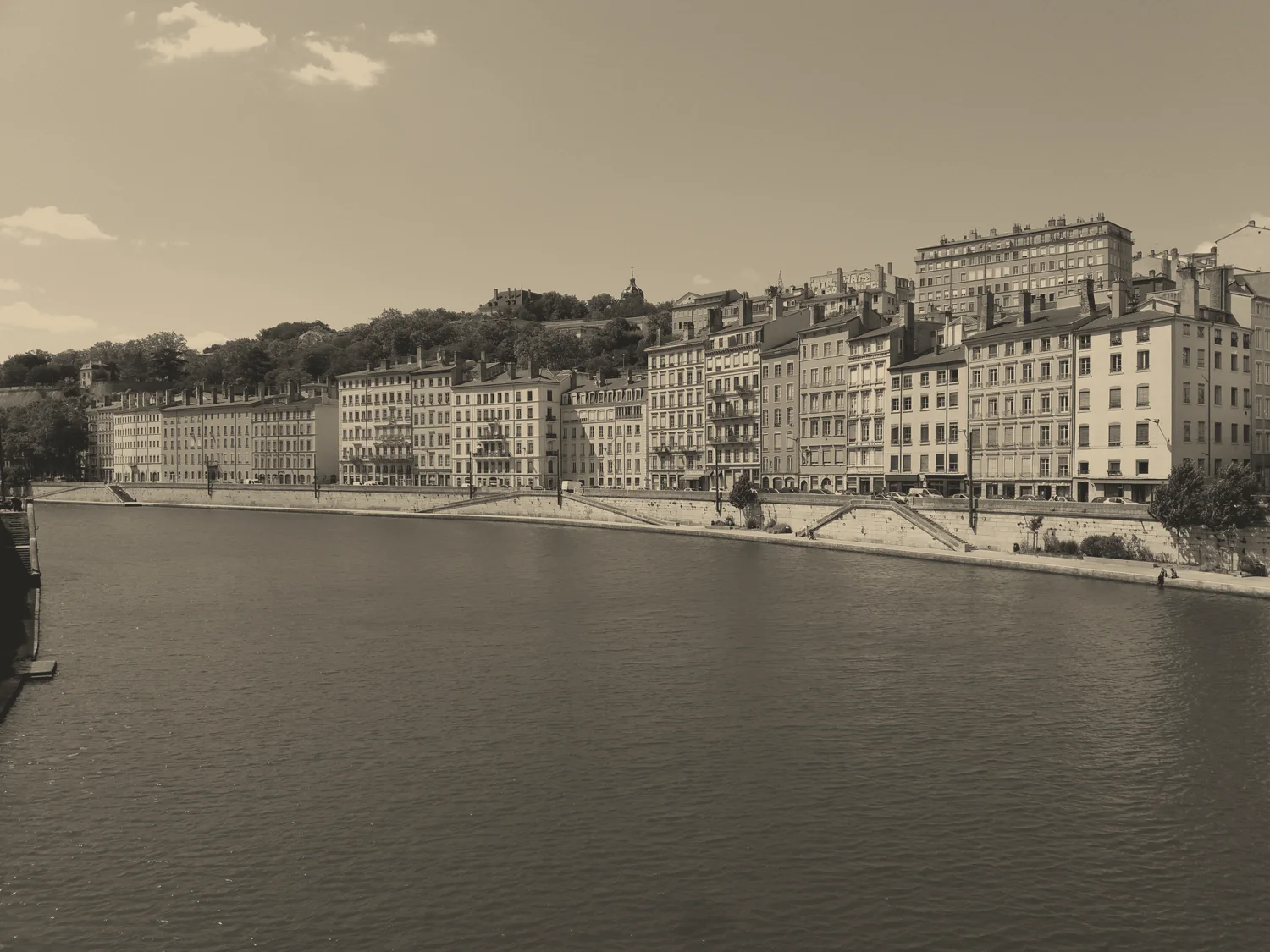
Henri Mercier founded the workshop in 1924. Today, his granddaughters Claire and Léonore carry on the work at number 28, facing the Saône at the foot of Croix-Rousse.
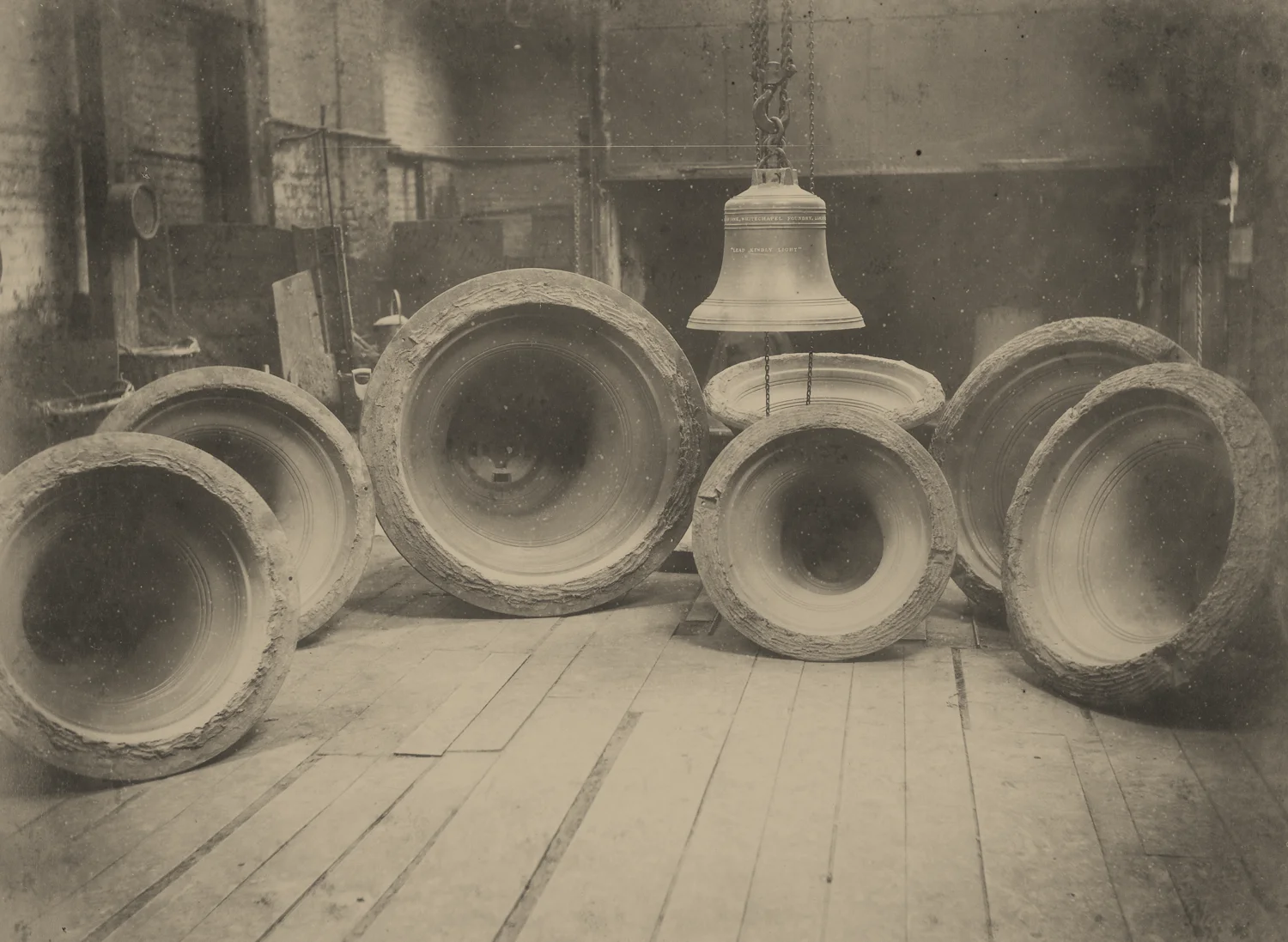
The cast begins long before the bronze flows. A look into the patient work of mould-making and the heat that turns metal into form.
Saint-Gaudens National Historical Park — The Process of Sculpture: From Clay to Bronze. Public domain.
Look at the crown. The pouring month, a number from 01/18 to 18/18, and its precise note in hertz are struck into the bronze alongside the Mercier maker’s mark.
Friday, 14:00–18:00
The foundry and tuning room are open. Four minutes on foot from Passerelle Saint-Vincent.
Find the workshop ↗Eighteen bells, once a month.
Prepare your slip and bring it to the workshop on Friday to arrange your reservation.